Crane Transport Checklist: What to Prepare Before Your Carrier Arrives
One overlooked step during crane transport preparation can snowball into major problems; denied authorizations or an idle driver can cause disruptions. None of those headaches belong in your week.
Moving heavy equipment requires coordination among dispatchers, riggers, and site managers. This guide serves professionals routing equipment across construction, renewables, and mining locations.
Run these procedures before arrival so you transition from planning to pickup with fewer surprises. Establishing a foundation ahead of time prevents delays and keeps project budgets intact.
1. Communicate Essential Crane Details
Experienced providers like Titan Worldwide Logistics cannot select the correct type of trailers or file accurate paperwork without complete data upfront. Missing details cause dispatch errors during machinery transport.
Information sharing forms the bedrock of any effective move. Cover boom type, counterweight status, attachment points, and working conditions before locking in quotes.
Measurements dictate whether a haul happens within legal bounds and without incident. Guessed dimensions lead to denied heavy haul permits or trucks turning around at low bridges.
Verify overall length, travel height, excess width, and axle load limits against the physical unit. Federal baselines triggering oversize rules start at defined limits, as each state may push restrictions tighter.
Providing original manufacturer specifications helps transporters anticipate required axle configurations. This preliminary data allows logistics teams to evaluate potential route constraints beforehand.
Detailed schematic drawings give carriers a comprehensive picture of center-of-gravity placements. Knowing these precise balance points ensures secure loading and prevents in-transit shifting.
Photographs of the current setup help identify aftermarket modifications that alter baseline dimensions. Sharing these visual references eliminates confusion regarding add-on components or custom attachments.
2. Plan Effective Load-Out Procedures
A documented sequence defines the order in which components are staged and lifted onto the deck. The Bill of Lading reflects this planned sequence; deviations create document errors that complicate liability.
The staging agenda coordinates rigging crews, operators, and drivers before gate arrival. Vital elements include lift point identification, BOL alignment confirming freight mass, and defined personnel roles.
Transporters need verified site details beforehand, including access road widths, surface conditions, overhead clearances, and utility proximity. Poor site data stops trucks short of the load zone or stalls departure.
Urban locations bring narrow access windows, compact turning radii, and dangling wires. Rural sites present unpaved roads; bearing capacity near the lifting area matters just as much as the path inward.
Scheduling an on-site kickoff meeting aligns all parties on safety protocols and communication signals. This brief gathering ensures everyone understands their distinct responsibilities during the loading phase.
Designating a single point of contact reduces conflicting instructions on the ground. Clear leadership keeps the operation moving forward and limits unnecessary downtime.
Weather conditions dictate ground stability and visibility during intricate lifts. Monitoring local forecasts helps managers pause operations before severe storms compromise workplace security.
| Pro Tip: Schedule your site assessment at least 72 hours before the carrier arrives. This buffer gives you time to address access issues like overhanging branches, unstable ground, or utility conflicts before they become expensive delays |
3. Select Appropriate Transport Equipment
Different machines ride on varied trailer designs. Making an incorrect choice exposes your cargo to damage. Platform selection hinges on load height, overall mass, teardown level, and deck clearance.
For large hauls, RGN trailer beds handle front loading, while lowboys carry towering units needing low height. Step decks suit medium sections, whereas flatbeds move rigging gear.
Match the platform to the item before pricing. Exceeding legal dimension rules triggers permit conditions varying across regions.
Route surveys account for bridge caps, closed corridors, and construction zones. Spring frost laws impose seasonal weight reductions of up to 35% on designated routes, and activation dates can shift based on weather conditions, so routes should be verified against each state’s current postings before departure.
Specialized 13-axle trailers distribute weight to protect local infrastructure. Transporting massive loads requires careful axle spacing to meet provincial or state regulations.
Each trailer serves specific weight ranges and crane configurations:
| Trailer Type | Weight Capacity | Best Suited For |
| Flatbed/Step Deck | Up to 48,000 lbs | Mobile, Self-Erecting Cranes |
| Lowboy | 40,000 – 95,000 lbs | Telescopic, Light Crawler |
| RGN (13-axle) | 40, 000 lbs | Heavy Crawler, Tower Sections |
4. Prepare Machinery For Safe Relocation
Physical readiness and mechanical preparation operate as parallel tasks requiring completion before pickup. Preparation involves retracting booms, removing counterweights, securing outriggers, draining required fluids, and stripping loose parts.
Maintenance checks include:
- Engine condition for self-loading cranes
- Hydraulic checks
- Confirming every pin is torqued.
Non-running machinery carries special loading rules that you must flag to dispatchers.
Washing the equipment removes dirt and debris that could obscure critical inspection points. Clean machinery allows drivers to spot existing scratches or dents before signing the liability paperwork.
Locking cab doors and securing fragile glass windows prevents vandalism during overnight rest stops. Removing valuable electronics from the operator cabin deters theft along the journey.
Labeling dismantled sections ensures efficient reassembly at the destination site. Providing an itemized inventory list prevents loose bolts or brackets from getting lost in transit.
Securement protocols fall under federal regulations rather than driver preference. Chains, binders, straps, and blocking must satisfy load limits based on freight mass.
Tie-down placement depends on freight length and balance point. Shippers should verify all documentation, including inspection records, before authorizing departure.
Using edge protectors stops sharp metal corners from fraying nylon tie-down straps. Maintaining equipment integrity requires heavy-duty securing hardware rated for industrial applications.
Drivers conduct en-route inspections to ensure binders remain tight after initial road vibration. Regular monitoring prevents small shifts from turning into hazardous cargo situations.
| Key Insight: Federal securement regulations mandate specific chain grades and strap ratings based on cargo weight. Using equipment rated below your crane’s mass isn’t just risky; it creates legal liability that your insurance may not cover. |
5. Coordinate Crucial Shipment Timing
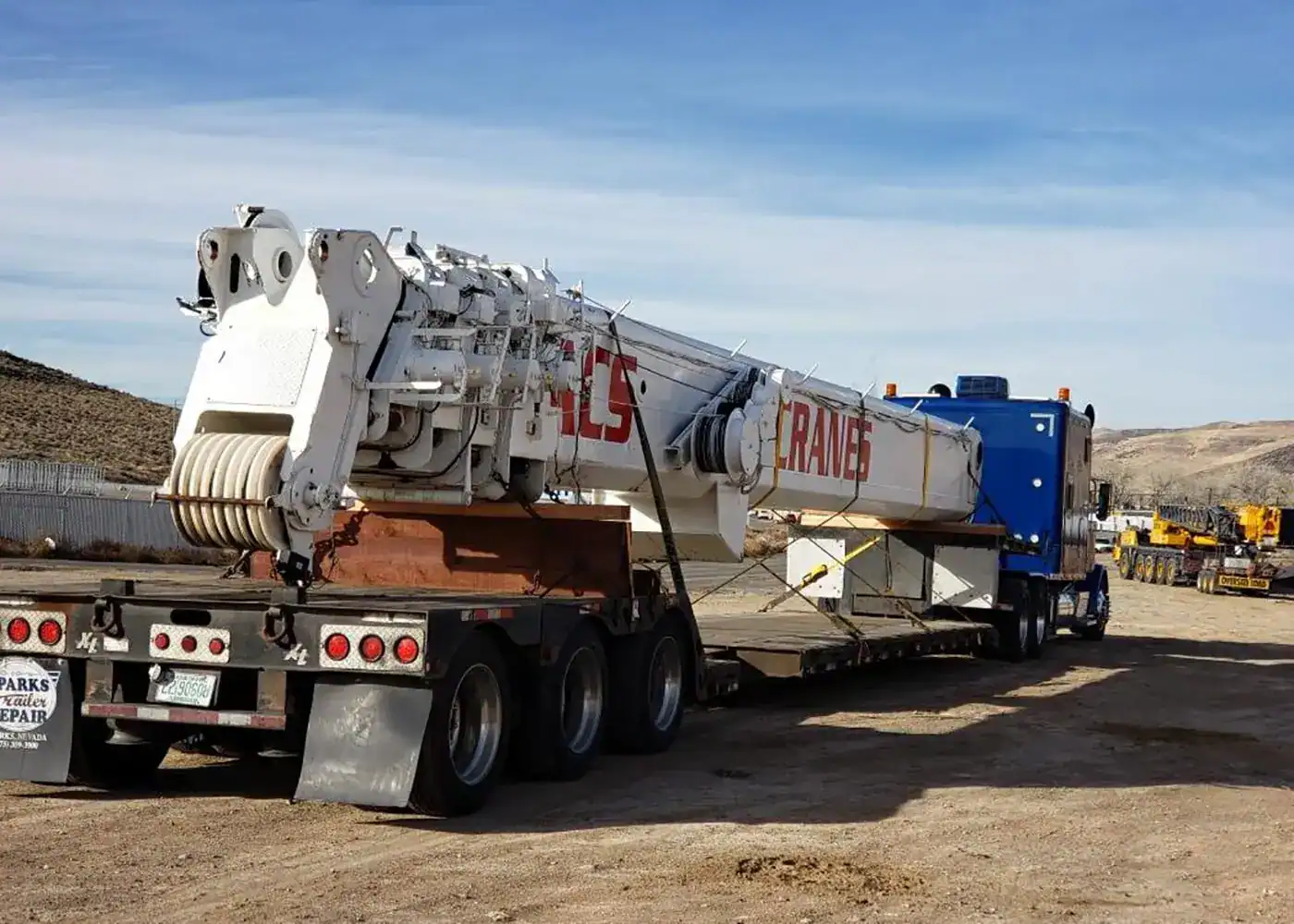
Scheduling ties to travel windows, daylight travel rules for wide loads, and offload crew schedules. When arrival times drift apart from site readiness, detention fees accumulate.
Winter bans and spring thaws alter transit possibilities season by season. Cross-border hauls introduce customs hours and border schedules.
An expert broker brings route knowledge and problem-solving that standard brokers lack. Internal permitting and pilot setups keep your relocation progressing without friction from origin to destination.
Seek providers possessing freight experience across diverse industries. Dedicated support ensures smooth communication without navigating long email threads.
Aligning delivery dates with crane assembly teams minimizes rental costs at the receiving end. Avoiding weekend arrivals prevents equipment from sitting idle while waiting for Monday morning crews.
Real-time GPS tracking offers visibility into current locations and estimated arrival adjustments. Sharing this tracking link with site managers enables proactive preparation as the truck approaches.
Contingency planning accounts for unforeseen flat tires or sudden mechanical breakdowns. Having backup resources on standby keeps the overall timeline moving forward despite minor setbacks.
Ensure Smooth Crane Transportation
Moving oversized equipment presents challenges; controlling variables beforehand guarantees dependable outcomes. Closing out these checklist tasks lowers the odds of unexpected delays ruining your schedule.
Leverage industry knowledge and equipment access to maintain firm deadlines from the initial call until delivery. Reach out early, so your next shipments arrive at prepared sites.
Documenting lessons learned after every relocation helps refine standard operating procedures. Continuous improvement builds a resilient supply chain capable of handling any industrial challenge.
Building long-term relationships with reliable transport partners like Titan Worldwide Logistics yields better pricing and priority scheduling. Trust forms the ultimate safety net when navigating complex logistics projects.